Wednesday, March 19, 2014

Revisiting Little House on the Prairie

Like many children born in the 1970s, one of my best childhood friends-in-a-book was a plucky pioneer girl named Laura.

I loved the Laura Ingalls Wilder books: Little House in the Big Woods, Little House on the Prairie, On the Banks of Plum Creek... I read and re-read them so many times that I knew the stories backwards and forwards.

And I loved Laura. Like me, she had a older blonde sister who was the one who liked to cook and sew, while Laura wanted to be running barefoot in the wind. When cows got into the haystacks, or a ball of fire was rolling toward the house, Laura was the one who leapt into action. She was the brave one, always ready for another adventure. I loved that about her. And I loved that she was always pushing back her sunbonnet so she could see the whole world around her.

Over the years, and my many moves, my well-worn series of Little House books has traveled with, covering more miles than the Wilder family rode in their wooden wagon.

A few months ago I brought out the first book to show Miya. At first she was not too interested. She is used to short books filled with colourful illustrations and brief narratives. Long chapter books with only occasional pen and ink drawings were new to her. But just like her, the character of Laura is four years-old when we first meet her in the Big Woods of Wisconsin. And Ingalls Wilder writes in a beautifully descriptive yet accessible style that is perfect for children. She describes birds in flight, the shifting play of colours and light in a sunset, the sound of winter winds on clapboard walls... I could see Miya imagination increasingly engaging with the stories.

Soon she was asking for the Little House book each night at bedtime and would listen carefully to the story. When we finished one, she couldn't wait to start the next. She listened wide-eyed to stories of prairie blizzards and fires, wolves howling in a circle around the house. We had to reassure her several times that there are no wolves around here.

I wondered if she would lose interest as Laura grew into a teenager, then a young woman. But she stayed engaged in the story. I will admit I skipped over some passages in the latter books. The part where the woman she was boarding with pulled a knife on her husband - we passed over that. I also left out the chapter where Pa and some other men dress up in 'black face'.

But the book prompted conversations about the native rights and how settlers pushed people off their land. We had discussions about racism when Ma says 'The only good Indian is a dead Indian.' And I figured our other conversations about diversity have sunk in when Miya announced that after college Mary would likely marry someone who is also blind, "a blind boy or a blind girl".

We finished the last book a few weeks ago, but Miya still brings up Laura and Mary from time to time. It's neat how they have become real to her, just like they were to me in my childhood.


Wednesday, February 19, 2014

50 days of giving

I am 50 days into my giving project - a gift a day for 365 days. So far it's been pretty easy and I'm already feeling some de-cluttering joy.

Loaded up for a day
of deliveries
One of my primary motivations for doing this project was to take a serious look at the things we have and pass on those which we no longer need. In keeping with this, more than to 3/5 of my daily gifts thus far have been donations of 'previously owned' items, especially baby clothes. Knowing that I would be starting this project in the new year, I had a stockpile of these ready to pass on and it was very satisfying to pack them up and get them out of the house.

But in my eagerness to get rid of things, I packed the bags pretty full in those first few weeks. Then I began to realize that it's still a long way till the end of December and I should stretch things out a bit. This has also encouraged me to look around for different people and organizations I might be able to help.

It's funny how happy I feel when I hear of places or people looking for donations. Our school is collecting books for the spring book fair. The Snowsuit Fund is having an annual drive. The upcoming Winter Carnival at Iona Park will be collecting donations of mittens. Excellent!

I've also become very appreciative of local organizations that have lists on their websites of the kinds of things they regularly accept as donations. And I must admit, Freecycle has become is an easy go-to. I have posted offers for things like cook books, CDs, and art supplies and have had them snatched up in no time. People will even pick the items up! Although there is still a set of V's martial arts belts that no one has asked for...

"Buttons by Miya"
I'm trying to involve my family in this project as much as they are willing. If Miya makes cards or crafts for someone, that counts as a daily gift. One afternoon we fun making little magnets from old buttons, half of which she gave to her grandma.

I'm also always happy to have an excuse to knit, so I've knitted up a few daily gifts: wash cloths for Clean Kits, a hat for V, and a couple of scarves. So in many ways, I feel like I'm just getting started.

For the sake of public accountability, I am tweeting my daily gift. You can follow me @AnitaGrace11. I'm also always looking for gift ideas - so if you know of a local charity that accepts donated items, please post a comment below or send me a tweet.

Friday, January 10, 2014

The 1st 10 days of giving

I'm 10 days into my New Year's challenge of giving something every day (a.k.a. 365 gifts) and so far it's been quite fun.

As planned, my daily gifts have been a combination of new/purchased items (i.e. coffee beans to thank our lovely hosts in Kitchener) and donations of used items (i.e. a blanket and flannel sheets for my favourite food bank).

But I've had to pace myself and am purposefully not filling up the donation bags as full as I can. 355 days to go, I remind myself. So in some ways this is curbing my generosity.

Like yesterday, when I was at the Parkdale Food Centre chatting with the Executive Director Karen Secord, she told me about a new bakery in the 'hood - Bread By Us. They have a suspend system where clients can buy a loaf of bread and pay for another one which is 'suspended'. Karen directs her clients to the bakery and they can receive a loaf of suspended bread, no questions asked.

"Go now," Karen urged me - and tried to convince me that 8-month-old Nisha really needed a cookie.

Sounds great, I thought. But I'd just dropped off my donation for the day, so I'm going to save it for another time. This delay felt a bit counter to the spirit of this project.

That said, I have had to make some modifications to the project. Since I don't usually have access to a car during the week, it's hard to deliver my gifts or donations outside of walking distance. So on the days I can't deliver, I'm setting the bag or box in the sun room. And I'm not going to let myself cheat here (no saying, I'll put that together tomorrow). By the time I tweet it (#365gifts), anyone can show up and say 'I hear you have a donation for ... and I have to be able to hand it over. I also appreciate organizations like the Ontario Federation for Cerebral Palsy who will pick up donations.

This means on the days I do have the car, I'm get to feel like Santa, driving around with my gifts to deliver. Ho ho ho!

But I have discovered that this project is going to require a lot of research, at least if I'm going to stick with my goal of trying to intentionally place items where they are needed and not just dump everything in a charity donation bin. I really appreciate the organizations, like Ottawa's Youville Centre, that provide an online list of items needed.

I'm also keeping a little notebook with ideas for donations, places that accept used items, etc. It's great too that friends are starting to make suggestions.

And more ideas are certainly welcome - 355 days to go!

Tuesday, January 07, 2014

Donating baby clothes

It is amazing how one little person can have so many clothes!

As any parent knows, you end up with a lot of clothes when you have a baby. And given that most babies grow an inch a month in the first six months, then an inch every two for the rest of their first year, baby clothes are outgrown very quickly. There are cute little outfits my girls have received as gifts that were only worn once or twice before they were outgrown.

So, what to do with the mounds of baby clothes that have been outgrown?

There are consignment stores, such as Boomerang Kids in Ottawa, that will accept used items. But with so many families wanting to off-load clothing, consignment places can afford to be pretty picky and they prefer top brands. I have taken bags of clothing there, only to half of the items rejected.

While I'm not trying to pass on stained and worn-out clothes (those I turn into rags), I have been looking for places in town that will accept gently used items that are still in decent condition - and give (not sell) them to people in need.

Here's what I've found so far. Would love to hear more suggestions.

- Birthright Ottawa, a volunteer-run charity that supports women with unplanned pregnancies. They will take good quality clothes for infants and toddlers (up to 2 years-old).

- Youville Centre, a charity which helps single mothers. They have a handy pdf of the various gently-used items they accept, which includes children's clothing (infant to age 6).

- City of Ottawa's family shelters. There are two family shelters run by the City that assist families in need of temporary emergency shelter for a variety of reasons including financial, health and family crisis. The shelters accept donations of household and personal items - including baby clothing and bedding.

Additionally, those looking to donate cloth diapers can pass them on to Diaper Lending Ottawa, a volunteer-run not-for-profit that will accept donations of cloth diapers (in any condition!) which they repair, clean and lend out.

Friday, January 03, 2014

Book: The Year of the Flood

I was looking at the CBC Canada Reads list the other day and noted that I had read none of the five 2014 contenders. This wouldn't do. And, since I'm aiming to read 13 Canadian books before Canada Day, I decided to read at least one on the list.

I started with Margaret Atwood's The Year of the Flood (2009), a dystopian novel whose narrative steps before and after the 'waterless flood' that at some point in the future has killed most of the world's population. The book's two main characters have survived this flood because they were barricaded from contagion - one in a deserted spa, one in a high-end sex club.

The novel is dark, although its satire is amusing and the narrative is engaging. Atwood hooks the reader in - primarily because you have to read more than two-thirds of the book to find out what this destructive flood is, and even then she is a little vague.

Fear is constant throughout the book - of the impending flood, and then of the chaos and desolation it wrought. There are strange species (i.e. rakunks - a mix of racoons and skunks) that were gene-spliced by mad scientists. There is anarchy in the streets and gated communities controlled by private companies. It is all rather grim and more than a little depressing. At times when reading this book I had the strong urge to move to the country, plant a large garden, and raise bees.

This book is part of a MaddAddam Trilogy, and takes place in parallel with Oryx & Crake (2003).  I haven't read that book and am not sure I want to - although I guess it explains the 'waterless flood' in more detail. But if it's anything like this one, reading it would be to fall down the rabbit hole of the dread that happens when I read too many articles about climate change and environmental destruction. I'm already scared enough, without needing Atwood to throw in crazy scientists and genetic manipulation.

Reading this book is not unlike driving by a road accident - you can't help looking, but feel a little unsettled for doing so.

Saturday, December 28, 2013

A year of giving - 365 gifts

Anyone who knows me, or who has followed this blog in the past, knows that I'm a bit of a sucker for New Year's challenges. For example, in 2011, I blogged precisely 365 words each day for 365 days.

As another new year approaches, I find myself itching to take on a new project. So, for 2014, I have set the goal of giving something away every single day.

One of the primary motivations for this project is simply that we have a lot of stuff. Too much stuff. Our basement and garage are filled with stuff. We don't need most of it, so it's high time to pass it on.

Sure, I could just organize one big garage sale or dump the lot of it off at Value Village or St. Vincent de Paul, but I want to be more intentional about this. For example, I know that bird sanctuaries will take old towels and baby blankets. My goal is to find people and organizations that could make use of the things we no longer need. I'll do some research, make some phone calls - and post information about what I find out in case there are others reading this blog who also have things that could be put to better use.

But this won't just be about giving away my old junk.

I'll be the first to admit that I am terrible at remembering to give presents. Perfect example, after Miya's last day of JK before the Christmas holidays, her teacher sent out an email to all the parents thanking them for their thoughtful Christmas gifts. The problem is, I forgot to send one. I also forgot to put out a card and tip for my newspaper deliverer.

I don't know how many times I have been at events where other people have lovely little gifts and I stand barehanded. It's not that I mean to be stingy. I just don't think of it until it's too late.

So in the year of giving, I resolve to pay better attention to the many occasions when gifts are expected.

Unlike my previous New Year's projects, this one will be a family affair. I'll be encouraging Miya to give where she can - even simple things like thank you cards or little crafts. We can't afford to buy 365 presents, so many of the things we give this year will be handmade - baking, knitting, etc. Cash donations will count, too.

What won't count is things that are given within the family. I can't pour my husband a cup of coffee and count that as my daily gift. I can't count the clothes and necessities I buy for my children. The exception here will be special occasions - like birthdays or anniversaries.

I won't be blogging each gift - that would be tedious and some may think this project already sounds a little too precious. But for the sake of public accountability, I will tweet each gift - @AnitaGrace11, #365gifts.

Your comments and feedback - and reminders of special occasions - will be welcome!

Monday, December 09, 2013

Science experiments with baby Nisha

I recently interviewed Churchill Alternative School teacher Shauna Pollock, 2013 winner the Prime Minister's Teaching Award for Excellence, and wrote an article about her for our local paper, The Kitchissippi Times.

As usually happens when I'm covering local events, I had my mini-assistant with me, 7-month-old Nisha. During the interview, Nisha crawled around the classroom floor, played with our shoes and tried to eat some books.

I mentioned that I had wanted to involve Nisha in the Roots of Empathy program, which has babies visiting school classrooms several times over the course of a year. Ever looking for new ways to engage and teach her students, Shauna suggested Nisha come back to visit this classroom. A couple days later, Shauna and I used Google Drive to draft a 'science experiment' the kids could do with little Miss N.

Nisha is just at the cusp of understanding object permanence - a fancy way of saying that she'll understand that even if she can't see something, it still exists. Shauna and I created an experiment with which students could test if she has reached this cognitive milestone.

When we came to Class 209, Shauna had the lesson plan projected on the big screen at the front of the room. She asked the kids if they thought baby Nisha is able to form memories. They were invited to write out their hypothesis on their lab sheets.

We explained the idea of object permanence and the experiment we had designed. Students would show Nisha a toy, then cover it with a cloth. Observe how she responds. Does she seem confused? Does she try to look for the toy? Will she lift up the cloth?

The experimenting began and students were eager to engage with Nisha and test their hypotheses. They took turns trying to get her attention with a toy, then covering the toy up.

Students recorded their observations of how she responded - which was generally to look away and almost never to reach for the cloth or search for the hidden toy.

The funniest part of the experiment happened almost accidentally. Nisha had not napped well that morning and after about half an hour, she was getting fussy and restless. She started crawling around the floor, trying to grab students' papers. I suggested we cover up something she was crawling toward and see what happened.

So when Nisha began crawling toward some blocks on the floor, a student quickly threw the cloth over them. Without a pause, Nisha kept crawling right on over. She didn't even notice that what she'd been after had disappeared.

"I had no idea she would be this oblivious!" laughed Shauna.

The class has invited us back in the new year so we can retest for object permanence and see how Nisha's cognitive development is progressing. We'd like to try another experiment then too.

Any suggestions?


Here is a lovely blog entry written by one of Shauna's students.

Monday, November 25, 2013

Book: From the Fifteenth District

Mavis Gallant's book From the Fifteenth District is a collection of nine wonderfully written short stories set Europe, in periods of time ranging from before, during, and after World War II.

The characters are vividly drawn and the settings are so artfully portrayed as to almost become additional characters in the story.

I was especially drawn into a story called 'The Moslem Wife' about a British woman who inherits the family hotel in the south of France. Like many of the stories in this collection, this one has several layers. It is about the protagonist's relationship with her lazy, philandering husband, but also about British expatriates during the period leading up the the Second World War, about the war, and about fractured communities.

Mavis Gallant, born in Montreal in 1922, was a journalist in Canada before moving to Paris in 1950 to write. Many of the stories in this collection are about people who inhabit a space without actually belonging to there - a British family who moves to the Riveria so the ailing patriarch can die there, a German former soldier who does not make it back to Berlin until many years after the war has ended, an aging Polish bachelor in Paris who falls for a flighty Canadian girl...

The tension of person and place has a strong role in each story, as much as any dynamic between characters. As someone who has spent many years of my life inhabiting but not belonging to a place, these stories resonated deeply with me. I was also impressed with Gallant's talent as a short story writer such that in with so few words, she is able to create such a rich and complex world of places and people.

Friday, November 01, 2013

Pumpkin Walk in Iona Park


They started coming in the morning. Yesterday's jack o'lanterns. Those pumpkins that had been carefully carved and proudly displayed on porches, front steps and window sills. Normally discarded the day after Hallowe'en, now given one last chance to shine.

Tonight was Ottawa's first pumpkin parade. Through word-of-mouth, social media, and flyers, we'd been inviting people in the Iona Park neighbourhood to bring their Hallowe'en handiwork to the park. At dusk we began putting candles inside them and the jack o'lanterns began to flicker and glow as night fell.

The idea for this parade came from my friend, Allegra Newman. She used to live in Toronto where the Sorauren Park Parade amasses around 2,000 pumpkins each year.
Iona Park's inaugural Pumpkin Walk was a more modest affair. By 8 p.m. there were close to 30 pumpkins lining the northern pathway into the park.

But it was a good beginning. Violet Lowe, who has lived beside the entrance to the park for 56 years, was thrilled to see the decorated pathway. "This is fantastic," she said.

Several young families and local residents braved the blustery winds to come to the park between 6 and 8 p.m. and admire the skill and creativity of carves in the neighbourhood. In addition to grinning pumpkin faces, there was a howling wolf, a man being chased by a dragon, and a lovely snowflake pattern.

The pumpkins will spend the rest of the weekend in the park, where they will be enjoyed by squirrels and admired by children, then picked up on Monday by city waste management.

Tuesday, September 10, 2013

Packing lunches for kindergarten - why is there not an app for this??

Miya on her first day of school
And so it begins. My little girl is now in kindergarten. A big, new school. New teachers. New kids. A lot to process for a 4-year-old.

For her mother, there's a different sort of process going on - planning and packing daily lunches and snacks. With a ridiculously early school start time of 8:00 a.m., we have to run our mornings with the precision of a military operation in order to get baby, child and mother out the door within 45 minutes. Advance planning is key.

Surely, I thought, when everyone has a smartphone attached to their body at all times, there must be an app to help me. I imagined a drag-and-drop set up where I could list the things Miya likes in her lunch in one column, the things she likes for snack in another, than drag and drop them into a weekly or monthly calendar.

Sadly, such a thing does not seem to exist. If anyone knows of one - or has the smarts to design it - please let me know!

In the meantime, I'm going old-school. I found a pdf file to print. I've created three different weekly menus and plan to rotate through them - not because I'm brimming with lunch ideas, but so it doesn't get too monotonous for my little kindergartener.

Here is an example of one of Miya's weekly menus:

Monday
Snacks: apple slices, crackers, berries
Lunch: pasta, sausage, red pepper slices

Tuesday
Snacks: nectarine, muffin, rasins
Lunch: bagel and cream cheese, cucumber strips

Wednesday
Snacks: waffle, apple slices
Lunch: tortilla and hummus roll, red peppers, yogurt

Thursday
Snacks: crackers, cheese slices, dried fruit
Lunch: chicken fingers, sweet potatoes

Friday
Snacks: raisin bread, dried apricots
Lunch: jam sandwich, grape tomatoes, yogurt

If anyone has any suggestions for quick, easy things to add to the menu, please post them in the comment section below. Bonus points for things that can be made and packed up the night before.

Saturday, August 17, 2013

Wading pool challenge complete

Miya surveying Hampton Park wading pool
With less than a week to spare, Miya has completed the Kitchissippi Wading Pool Challenge of 2013 - she has visited all 13 wading pools and splash pads in our city ward. On a hot, sunny day like today, summer seems far from over - but several outdoor wading pools closed yesterday, and the remaining pools will fill for the last time on Friday.

Asked how she felt about seeing this challenge through, Miya simply said, "good." Frankly the whole concept of a challenge seemed a bit lost on her. But she's been a good sport.
Miya playing around at Woodroffe
Park Pool

And while this challenge may seem like a walk in the park, Miya did not come through without some battle scars. After a chilly dip in the Parkdale Market wading pool one Saturday, her mother wrapped her up tight in a towel to warm up. Foolish mother. The towel was so tightly bound that when Miya tipped forward while sitting on the ground, she had nothing to catch her fall but her face. A fat lip and nasty scrapes around the nose were testament to the ordeal. (Luckily, her daddy happened to bring back some homemade ice cream sandwiches shortly afterward, which magically dried the tears.)

Despite such mishaps, exploring the local wading pools has been a great way to get to know our neighbourhood better. Watching the dog wading hour in Reid Park, joining a community party at Champlain, listening to African drumming at LaRoche, making a bunny craft at Woodroffe, and attending a birthday party at Hintonburg - it's been a more diverse experience then we had anticipated at the start.  Miya was even interviewed about it all by the local community paper.

Map of Kitchissippi splash pads & wading pools.
Miya put a sticker on each one after visiting it.
After 10 pools and 3 splash pads, Miya still counts Iona Park as her favourite pool (it does have home court advantage) but she was impressed with several of those she visited - especially McKellar Park that has penguins painted on the bottom of the pool. All in all, a successful summer mission.


Anyone else visit some good wading pools this summer?

Monday, July 29, 2013

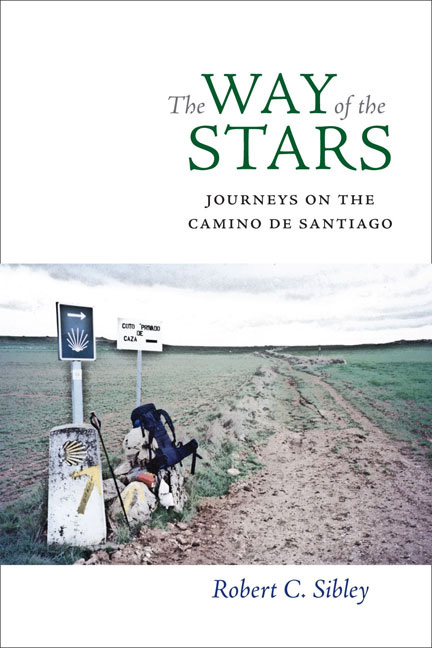
Book: The Way of the Stars

The Camino de Santiago is a pilgrim trail which leads to Santiago de Compostela in Northern Western Spain. Although pilgrimage may seem like a medieval practice, this Spanish pilgrimage has become increasingly popular in the last 30 years.

Thousands of pilgrims make the journey each year. They may spend days, weeks, or even months along roads which gather like tributaries from across Europe.

Not surprisingly, the increased popularity of the Camino pilgrimage has resulted in several books about it, most of which are guide books or travel memoirs.

Robert Sibley's book, The Way of the Stars, is one of these. Published in 2012, it describes his experiences along the Spanish trails. Written in a clear, descriptive voice which reflects his vocation as journalist and professor, it's narrative touches upon questions of faith, consciousness and quest, but mostly deals with earthly interests of a modern-day agnostic - food, drink, walking conditions and the physical effort of walking every day.

I, too, have walked the Camino de Santiago - twice in fact. I, too, have written a book about it - although mine is yet unpublished. It is because I am renewing my efforts to publish this work that I read Sibley's book. I wanted to see how he relayed the experience, how he wove together the history of the trail with its current condition.

As I read Sibley's book, I not only discovered the Camino through his eyes, but his narrative awoke my own memories of places, people and experiences. I couldn't help wishing I could return to the magical, mystical footpaths he describes and I remember. But for now, I will content myself with returning to my own manuscript, the writing of which is its own arduous journey.


Thursday, July 25, 2013

Book of Mercy

When Leonard Cohen wrote the Book of Mercy in the early 1980s he described himself as being "unable to speak in any other way" and that he had been "silenced for a long, long time." The book of 50 prose poems is a poignant conversation between himself and "the source of mercy."

It is filled with longing, regret, sorrow and hope. In its pages, the author "falls radiantly toward the light to which he falls" (Book of Mercy, 8)

Published in 1984, this is Cohen's eighth book of poetry. At that time, he had already published two novels and released eight recording albums. Throughout all of these works there are recurring themes of spiritual (and sexual) longing, but more than any other, this book is liturgical, prayer-like. Though influenced by his Buddhist practice and his interest in Christianity, it is very much a tribute to, and participation in, his Jewish faith and traditions.

Book of Mercy is composed of 50 numbered pieces. They are short in length, but deep with imagery and Scriptural references. The language is so carefully crafted that one reading alone does not feel sufficient for grasping everything contained in each poem.

I read this book in one sitting, which is like standing under a waterfall with the weight of words tumbling around me. I know I'll want to return again - but next time to enter slowly. Dip my toes in. Read just one verse and sit with it awhile. This is a book you could take on a desert island and never tire of.

In verse 13, Cohen writes, "Friend, when you speak this carefully I know it is because you don't know what to say." Cohen speaks extremely carefully, but he knows exactly what to say.

Wednesday, July 24, 2013

Kitchissippi Wading Pool Challenge

It's not a challenge for the faint of heart. It takes commitment, tenacity. It also requires a bathing suit, beach towel and sun hat. Pool toys are optional.

The challenge? Visit all 13 splash pads and wading pools in the Kitchissippi area before the end of this summer. Do you have what it takes?

Miya at Parkdale Market Pool
Four-year old Miya is determined to see this challenge through. "I believe I have the fortitude and discipline to rise to the occasion," she said - or something to that effect. (It might also have been something like, "Can't we go to the pool now?")

So armed with a pink bathing suit, flowered hat, sunscreen, and a favourite beach towel, she ventures forth. For a girl still unwilling to submerge her face in water, she is making an admirable conquest of the neighbourhood pools.

Of the 10 wading pools, she has already visited 6. Asked which is her favourite, she chooses Iona Park - the wading pool closest to home in which she has spent many summer hours.

So are you up for the Kitchissippi Wading Pool Challenge of 2013? Leave a comment and let us know how many of the local pools you've visited this summer - and which one is your favourite.

Wading Pools in Kitchissippi:
Ev Tremblay Park: 108 Beech Ave
Reid Park: 40 Reid Ave
Parkdale Market Park: 366 Parkdale Market
Champlain Park: 140 Carleton Ave
Hampton Park: 645 Parkview Rd
Iona Park: 223 Iona St
Lions Park: 294 Elmgrove Ave
Westboro Kiwanis (Dovercourt): 411 Dovercourt Ave
McKellar Park: 539 Wavell Ave
Woodroffe Park: 180 Lockhart Ave

Splash Pads in Kitchissippi:
Hintonburg Park: 1064 Wellington St W
LaRoche Park: 52 Bayview
Roy Duncan Park: 295 Churchill Ave


Tuesday, July 16, 2013

Book: The Favourite Game

The late Paul Quarrington and I are in disagreement. He wrote the afterword for Leonard Cohen's debut novel, The Favourite Game. The game, he writes, is "marring something unbroken". I believe the game is the making of impressions.

Perhaps we both mean the same thing. You cannot make an impression without marring the surface. But while some might see that the game of the book's protagonist, Lawrence Breavman, as pursuing and marring perfection, I see it as a cultivation of impressions. Impression on body. Impression on spirit and soul.

The Favourite Game was published in 1963 and is viewed as a semi-autobiographical novel since it constructs the portrait of a young Jewish poet from Montreal. Yet while Breavman's vocation as a writer and poet is the underpinning of the book, the stories are about relationships - with women he refers to as 'mistesses' and with his childhood friend, Krantz.

Breavman, or perhaps Cohen as his biographer, is unable to stop being an observer of his own life and of these relationships. For a woman he "was a professional, he knew how to build a lover to court her." After wooing and winning her, and even living with her for a time of acknowledged happiness, Breavman must flee her since the lover "had a life of his own and often left Breavman behind." He knowingly chose loneliness, but he also chose the vantage point from which he could study the impressions which she had made on him, which he had made on her.


When I buy a book, I put my name, date and city of purchase on the inside. This book was bought in Saskatoon in November of 1996. At the time I was doing an undergraduate degree in English and Philosophy and took a course in Canadian Literature in which we read a Canadian novel each week. I read this book quickly, but in true student fashion, I underlined the passages which stood out for me. "A community is an alibi for the failure of individual love." "Poetry is a verdict, not an occupation."

Reading it now, so many years later, is like returning to a familiar city. Some places were vividly remembered, others lost in the folds of memory so as to be new discoveries. But in the years since I read this book, I have become an ardent Leonard Cohen fan - of his music, art, and poetry. In some of the phrases in this book, I heard an echo of a song he would later write. It was a joy to read this book - not just since it is poetic, intelligent and vividly descriptive, but because it is part of the artist I so deeply admire and respect.

Tuesday, July 09, 2013

Two couches, two worlds

http://communitycouch.tumblr.com/
There is a photographer in Ottawa who has been taking a beautiful old couch into neighbourhoods around  where we live. He invites people to sit, stand, lounge, etc on the couch while he takes pictures. Some of the shots are posted on his site.

What a lovely idea, I thought when I saw this, a great way to celebrate the places and people around here that I love so much. Sure, it's gentrified and all, but Westboro is a great place to raise kids. At a recent community event in our neighbourhood park we had over 100 people show up, despite the cool, rainy weather.

The Community Couch project seems like a neat way to capture some of the local vibe. I even pitched a story about it to my editor at Kitchissippi Times before realizing they are already going to be running a story on this next week.

Muzaffar Salam/Reuters
Then I sat down with last Saturday's edition of the Globe and Mail to read an article on the latest turmoil in Egypt and the Arab Spring movement. Opening the paper I was immediately struck by this image from Syria.  The couches are so similar, yet the setting couldn't be more different.

Sometimes it just takes a simple thing like the contrast of two images to remind me how fortunate I am to live where I do.

Thursday, June 20, 2013

Public breastfeeding

As I am once again the mother of a young infant, I get to rediscover public breastfeeding. If you're in Ottawa you may find me nursing my daughter at local coffee shops, restaurants, patios, public parks, community centres, etc.

It's not that I'm embarrassed to breastfeed in public. It's generally an accepted practice around here and I've never received dirty or scandalized looks. And I'm all for breastfeeding - for health and bonding reasons as well as the convenience of having a ready made, nutritionally balanced meal on hand (well, on breast) at a moment's notice. Wish meals were as easy to prepare for my pre-schooler!

That said, I don't have a militant, in-your-face approach to sticking my daughter on my boob. Despite often sporting a nursing shirt that has 'SALOON' written across the chest, I try to be discreet. The only person in the coffee shop who needs to see my nipple is my baby - and at 2 months she's already pretty adept at dive bombing it when given the slightest glance.

But as a mom who breastfeeds on demand and also wants to be out and about, my fashion choices are rather limited. While I don't object to flashing a breast, I would rather not have my post-pregnancy midsection hanging out for all to see. So I wear nursing shirts. These are made with easy, discreet access to what baby wants most. They typically have a very tell-tale flap along the chest and in my case often have bits of baby spit up or slobber on the shoulder. Most are designed for utility more than fashion, although the market is improving and Japanese Weekend has some pretty nice tops and dresses that don't advertise to the world that these boobs are ready for milking.

Despite my best efforts though, there are certainly times when my breast is on display a little more than necessary. Like when I open the front door to the UPS guy while nursing and my baby decides it's a good time to pop off and look around. I'm not sure who was more embarrassed.

Funny how I've gone from being someone who doesn't like to show too much cleavage to one so willing to publicly bare my breast. One of the many ways parenting has changed me.

Friday, March 08, 2013

More Jane: Emma & Northanger Abbey

In continuation of my exploration of Jane Austen's work, I recently read Emma (1815) and Northanger Abbey (1817), as well as A Memoir of Jane Austen (1870) written by her nephew J.E. Austen-Leigh

As Emma was nearing publication, Austen confessed in a letter that she feared "to those readers who have preferred 'Pride and Prejudice' it will appear inferior in wit, and to those who have preferred 'Mansfield Park' inferior in good sense". It's true that not a lot really happens in the story - but as with other Austen novels, its appeal lies in the witty dialogue, deft character descriptions and studied description of the life of English gentry at the turn of the 19th century.

Austen supposedly thought that no one besides herself would much care for the character of Emma - a spoiled girl who over-estimates her abilities and talents. But Emma is all the more engaging for her flaws and much of the humor in the book comes at her expense.

Northanger Abbey was the first of Austen's  novels submitted for publication (in 1803) - but the publisher reconsidered after further review of the manuscript and the book languished in a drawer for the next 14 years. After Austen's death in 1817, her brother bought it back from the publisher - who had no idea that the manuscript was written by the author who by then had become fairly well-known for four other novels.

The book was then published, but it is generally considered to be Austen's weakest work since it did not benefit from the extensive revisions and improvements which she made to her other books. Still, it has a liveliness to it that the other more polished books do not. In several places the author directly addresses the reader and offers her opinions on contemporary novels and other subjects. You get a sense of Austen as a budding novelist in this work - and can also see how her style improved with her other works.

Though the Memoir is quite reserved - the family was always very guarded and close-lipped about their famous authoress and almost all of her letters were burnt - it was interesting to learn a bit more about Jane Austen. For example, she felt very attached to her characters, especially her heroines, and they continued to live in her imagination and in the stories she would tell her many nephews and nieces. For example, from their memories, we learn that the letters placed by Frank Churchill before Jane Fairfax (something mentioned in the novel, but not revealed there) contained the word 'pardon'.

I'm quite enjoying my foray in the world of Jane Austen - and to add to the fun, after finishing each novel I watch at least one its film adaptions. The BBC had a mini-series for each book - and there are other films, including ones like Clueless (loosely based on Emma).

Tuesday, January 22, 2013

Reading Jane Austen

For the last few years I've been choosing an author to focus on. For that year I'll read books both by and about the author - often expanding my selection to the author's contemporaries, friends, etc.

Last year I focused on Margaret Laurence, an author I have long been a fan of. I read her 5 novels and memoir, as well as a biography, letters between her and her life-long friend Adele Wiseman, and Wiseman's novel Crackpot.

This year, after receiving two Jane Austen novels for Christmas, I'm turning to her gentle satire of English gentry in the 1800s.

I started off the year with Sense and Sensibility (1811), which is fitting since it was her first novel published. She published it under the pseudonym 'A Lady' and had to pay the publisher to print it.

The novel is about two sisters. Elinor, the elder, is  full of common sense and is highly conscious of what is respectable and appropriate. Her younger sister Marianne represents romantic sensibilities of impulsiveness and free expression of emotion. Both women are seeking love, but their differences in temperament affect how they go about this - and how well they succeed.

The second novel I read was Persuasion (1818), Austen's last complete novel, published after her death in 1817. Though similar to Sense and Sensibility in its focus on refined society and the pressures on young women to make suitable marriages, this novel is more satirical in tone. Austen is critical of the judgmental and selfish aspects of high society and shows how few options and opportunities women were afforded.

Both novels were very quick and engaging reads. There are few surprises, but the character descriptions and conversations are deftly drawn. The critical observations of society and gender roles are made more effective for being subtly woven into the text.

As a woman novelist, Austen was well ahead of her time. She was likely very aware that her narrative voice was new, and perhaps unwelcome at the time. Near the end of Persuasion, the novel's main character, Anne Elliot, is discussing women's constancy with a male acquaintance.

"I do no think I ever opened a book in my life which had not something to say upon woman's inconstancy" [he says]...
"If you please, no reference to examples in books," [Anne replies]. "Men have had every advantage of us in telling their own story. Education has been theirs in so much higher a degree; the pen has been in their hands. I will not allow books to prove any thing."

Thankfully we have the books of Jane Austen to prove that even in a time when women were restricted by strict social mores, limited in educational and professional opportunities, they were no less witty, intelligent nor capable of greatness.

Wednesday, November 14, 2012

CTTC Toy Report Released

Miya with one of the 'Best Bets' of the year.
Photo courtesy of Post media.
This summer, I wrote about how Miya was busy testing toys for the Canadian Toy Testing Council. Yesterday, with much fanfare and media buzz, the Council released its annual Toy Report.

The Ottawa Citizen describes the Toy Report as "a barometer of children's changing play preferences and toy trends from year to year." The Ottawa Sun calls it something to "help shoppers make 'smart toy purchases'. Global News even sent a reporter to get the low-down from some of the testers at the media launch.

It's rather satisfying to see the attention this report is getting, not simply because Miya's input is among that of roughly 400 kids who tested and evaluated toys - but because I wrote the report.

I have spent the last few months writing up approximately 420 toy descriptions for this report. Each description is about 100 words - a small space to try to convey a description of the toy and a summary of the key strengths and weaknesses reported by testing families. It was an interesting exercise in writing - especially since my editor did not allow the word 'fun' as an adjective - and toys and games were often described by testers as, you guessed it, 'fun'.

So if anyone is looking to buy some new toys for kids this Christmas, you may want to check out the report. There are a lot of manufacturers and distributors out there making recommendations for the best and most popular toys. But what is unique about CTTC's report is that the non-profit organization behind it has no vested interest in toy sales. So if a toy really doesn't perform, we're not afraid to say so. You'll also find helpful info about toys such as ones that work well on-the-go, ones that encourage active play, and those that require a lot of batteries.

Here at home, we're big fans of the cooperative games from Peaceable Kingdom - like 'Snug as a Bug in Rug' which Miya is playing with in the above photo. With everyone working together to a common goal, there are not individual losers. Quick to play and easy to learn - they're perfect for preschoolers.

So what do you think are the best new toys of the year?