Like many children born in the 1970s, one of my best childhood friends-in-a-book was a plucky pioneer girl named Laura.
I loved the Laura Ingalls Wilder books: Little House in the Big Woods, Little House on the Prairie, On the Banks of Plum Creek... I read and re-read them so many times that I knew the stories backwards and forwards.
And I loved Laura. Like me, she had a older blonde sister who was the one who liked to cook and sew, while Laura wanted to be running barefoot in the wind. When cows got into the haystacks, or a ball of fire was rolling toward the house, Laura was the one who leapt into action. She was the brave one, always ready for another adventure. I loved that about her. And I loved that she was always pushing back her sunbonnet so she could see the whole world around her.
Over the years, and my many moves, my well-worn series of Little House books has traveled with, covering more miles than the Wilder family rode in their wooden wagon.
A few months ago I brought out the first book to show Miya. At first she was not too interested. She is used to short books filled with colourful illustrations and brief narratives. Long chapter books with only occasional pen and ink drawings were new to her. But just like her, the character of Laura is four years-old when we first meet her in the Big Woods of Wisconsin. And Ingalls Wilder writes in a beautifully descriptive yet accessible style that is perfect for children. She describes birds in flight, the shifting play of colours and light in a sunset, the sound of winter winds on clapboard walls... I could see Miya imagination increasingly engaging with the stories.
Soon she was asking for the Little House book each night at bedtime and would listen carefully to the story. When we finished one, she couldn't wait to start the next. She listened wide-eyed to stories of prairie blizzards and fires, wolves howling in a circle around the house. We had to reassure her several times that there are no wolves around here.
I wondered if she would lose interest as Laura grew into a teenager, then a young woman. But she stayed engaged in the story. I will admit I skipped over some passages in the latter books. The part where the woman she was boarding with pulled a knife on her husband - we passed over that. I also left out the chapter where Pa and some other men dress up in 'black face'.
But the book prompted conversations about the native rights and how settlers pushed people off their land. We had discussions about racism when Ma says 'The only good Indian is a dead Indian.' And I figured our other conversations about diversity have sunk in when Miya announced that after college Mary would likely marry someone who is also blind, "a blind boy or a blind girl".
We finished the last book a few weeks ago, but Miya still brings up Laura and Mary from time to time. It's neat how they have become real to her, just like they were to me in my childhood.
Showing posts with label books. Show all posts
Wednesday, March 19, 2014
Friday, January 03, 2014
Book: The Year of the Flood
I was looking at the CBC Canada Reads list the other day and noted that I had read none of the five 2014 contenders. This wouldn't do. And, since I'm aiming to read 13 Canadian books before Canada Day, I decided to read at least one on the list.
I started with Margaret Atwood's The Year of the Flood (2009), a dystopian novel whose narrative steps before and after the 'waterless flood' that at some point in the future has killed most of the world's population. The book's two main characters have survived this flood because they were barricaded from contagion - one in a deserted spa, one in a high-end sex club.
The novel is dark, although its satire is amusing and the narrative is engaging. Atwood hooks the reader in - primarily because you have to read more than two-thirds of the book to find out what this destructive flood is, and even then she is a little vague.
Fear is constant throughout the book - of the impending flood, and then of the chaos and desolation it wrought. There are strange species (i.e. rakunks - a mix of racoons and skunks) that were gene-spliced by mad scientists. There is anarchy in the streets and gated communities controlled by private companies. It is all rather grim and more than a little depressing. At times when reading this book I had the strong urge to move to the country, plant a large garden, and raise bees.
This book is part of a MaddAddam Trilogy, and takes place in parallel with Oryx & Crake (2003). I haven't read that book and am not sure I want to - although I guess it explains the 'waterless flood' in more detail. But if it's anything like this one, reading it would be to fall down the rabbit hole of the dread that happens when I read too many articles about climate change and environmental destruction. I'm already scared enough, without needing Atwood to throw in crazy scientists and genetic manipulation.
Reading this book is not unlike driving by a road accident - you can't help looking, but feel a little unsettled for doing so.
Monday, November 25, 2013
Book: From the Fifteenth District
Mavis Gallant's book From the Fifteenth District is a collection of nine wonderfully written short stories set Europe, in periods of time ranging from before, during, and after World War II.
The characters are vividly drawn and the settings are so artfully portrayed as to almost become additional characters in the story.
I was especially drawn into a story called 'The Moslem Wife' about a British woman who inherits the family hotel in the south of France. Like many of the stories in this collection, this one has several layers. It is about the protagonist's relationship with her lazy, philandering husband, but also about British expatriates during the period leading up the the Second World War, about the war, and about fractured communities.
Mavis Gallant, born in Montreal in 1922, was a journalist in Canada before moving to Paris in 1950 to write. Many of the stories in this collection are about people who inhabit a space without actually belonging to there - a British family who moves to the Riveria so the ailing patriarch can die there, a German former soldier who does not make it back to Berlin until many years after the war has ended, an aging Polish bachelor in Paris who falls for a flighty Canadian girl...
The tension of person and place has a strong role in each story, as much as any dynamic between characters. As someone who has spent many years of my life inhabiting but not belonging to a place, these stories resonated deeply with me. I was also impressed with Gallant's talent as a short story writer such that in with so few words, she is able to create such a rich and complex world of places and people.
Monday, July 29, 2013
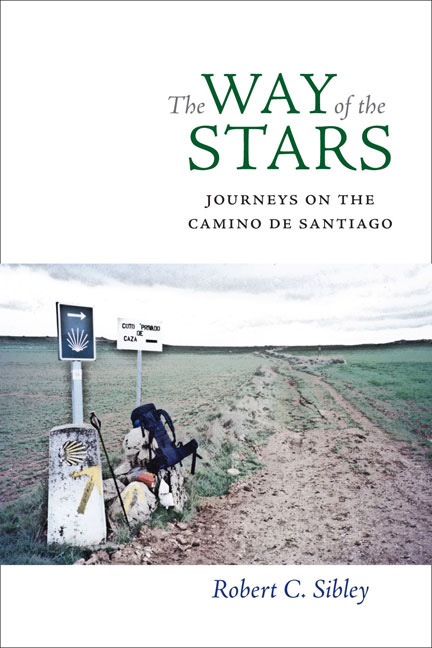
Book: The Way of the Stars
The Camino de Santiago is a pilgrim trail which leads to Santiago de Compostela in Northern Western Spain. Although pilgrimage may seem like a medieval practice, this Spanish pilgrimage has become increasingly popular in the last 30 years.
Thousands of pilgrims make the journey each year. They may spend days, weeks, or even months along roads which gather like tributaries from across Europe.
Not surprisingly, the increased popularity of the Camino pilgrimage has resulted in several books about it, most of which are guide books or travel memoirs.
Robert Sibley's book, The Way of the Stars, is one of these. Published in 2012, it describes his experiences along the Spanish trails. Written in a clear, descriptive voice which reflects his vocation as journalist and professor, it's narrative touches upon questions of faith, consciousness and quest, but mostly deals with earthly interests of a modern-day agnostic - food, drink, walking conditions and the physical effort of walking every day.
I, too, have walked the Camino de Santiago - twice in fact. I, too, have written a book about it - although mine is yet unpublished. It is because I am renewing my efforts to publish this work that I read Sibley's book. I wanted to see how he relayed the experience, how he wove together the history of the trail with its current condition.
As I read Sibley's book, I not only discovered the Camino through his eyes, but his narrative awoke my own memories of places, people and experiences. I couldn't help wishing I could return to the magical, mystical footpaths he describes and I remember. But for now, I will content myself with returning to my own manuscript, the writing of which is its own arduous journey.
Thursday, July 25, 2013
Book of Mercy
When Leonard Cohen wrote the Book of Mercy in the early 1980s he described himself as being "unable to speak in any other way" and that he had been "silenced for a long, long time." The book of 50 prose poems is a poignant conversation between himself and "the source of mercy."
It is filled with longing, regret, sorrow and hope. In its pages, the author "falls radiantly toward the light to which he falls" (Book of Mercy, 8)
Published in 1984, this is Cohen's eighth book of poetry. At that time, he had already published two novels and released eight recording albums. Throughout all of these works there are recurring themes of spiritual (and sexual) longing, but more than any other, this book is liturgical, prayer-like. Though influenced by his Buddhist practice and his interest in Christianity, it is very much a tribute to, and participation in, his Jewish faith and traditions.
Book of Mercy is composed of 50 numbered pieces. They are short in length, but deep with imagery and Scriptural references. The language is so carefully crafted that one reading alone does not feel sufficient for grasping everything contained in each poem.
I read this book in one sitting, which is like standing under a waterfall with the weight of words tumbling around me. I know I'll want to return again - but next time to enter slowly. Dip my toes in. Read just one verse and sit with it awhile. This is a book you could take on a desert island and never tire of.
In verse 13, Cohen writes, "Friend, when you speak this carefully I know it is because you don't know what to say." Cohen speaks extremely carefully, but he knows exactly what to say.
Tuesday, July 16, 2013
Book: The Favourite Game
The late Paul Quarrington and I are in disagreement. He wrote the afterword for Leonard Cohen's debut novel, The Favourite Game. The game, he writes, is "marring something unbroken". I believe the game is the making of impressions.
Perhaps we both mean the same thing. You cannot make an impression without marring the surface. But while some might see that the game of the book's protagonist, Lawrence Breavman, as pursuing and marring perfection, I see it as a cultivation of impressions. Impression on body. Impression on spirit and soul.
The Favourite Game was published in 1963 and is viewed as a semi-autobiographical novel since it constructs the portrait of a young Jewish poet from Montreal. Yet while Breavman's vocation as a writer and poet is the underpinning of the book, the stories are about relationships - with women he refers to as 'mistesses' and with his childhood friend, Krantz.
Breavman, or perhaps Cohen as his biographer, is unable to stop being an observer of his own life and of these relationships. For a woman he "was a professional, he knew how to build a lover to court her." After wooing and winning her, and even living with her for a time of acknowledged happiness, Breavman must flee her since the lover "had a life of his own and often left Breavman behind." He knowingly chose loneliness, but he also chose the vantage point from which he could study the impressions which she had made on him, which he had made on her.
When I buy a book, I put my name, date and city of purchase on the inside. This book was bought in Saskatoon in November of 1996. At the time I was doing an undergraduate degree in English and Philosophy and took a course in Canadian Literature in which we read a Canadian novel each week. I read this book quickly, but in true student fashion, I underlined the passages which stood out for me. "A community is an alibi for the failure of individual love." "Poetry is a verdict, not an occupation."
Reading it now, so many years later, is like returning to a familiar city. Some places were vividly remembered, others lost in the folds of memory so as to be new discoveries. But in the years since I read this book, I have become an ardent Leonard Cohen fan - of his music, art, and poetry. In some of the phrases in this book, I heard an echo of a song he would later write. It was a joy to read this book - not just since it is poetic, intelligent and vividly descriptive, but because it is part of the artist I so deeply admire and respect.
Friday, March 08, 2013
More Jane: Emma & Northanger Abbey
In continuation of my exploration of Jane Austen's work, I recently read Emma (1815) and Northanger Abbey (1817), as well as A Memoir of Jane Austen (1870) written by her nephew J.E. Austen-Leigh
As Emma was nearing publication, Austen confessed in a letter that she feared "to those readers who have preferred 'Pride and Prejudice' it will appear inferior in wit, and to those who have preferred 'Mansfield Park' inferior in good sense". It's true that not a lot really happens in the story - but as with other Austen novels, its appeal lies in the witty dialogue, deft character descriptions and studied description of the life of English gentry at the turn of the 19th century.
Austen supposedly thought that no one besides herself would much care for the character of Emma - a spoiled girl who over-estimates her abilities and talents. But Emma is all the more engaging for her flaws and much of the humor in the book comes at her expense.
Northanger Abbey was the first of Austen's novels submitted for publication (in 1803) - but the publisher reconsidered after further review of the manuscript and the book languished in a drawer for the next 14 years. After Austen's death in 1817, her brother bought it back from the publisher - who had no idea that the manuscript was written by the author who by then had become fairly well-known for four other novels.
The book was then published, but it is generally considered to be Austen's weakest work since it did not benefit from the extensive revisions and improvements which she made to her other books. Still, it has a liveliness to it that the other more polished books do not. In several places the author directly addresses the reader and offers her opinions on contemporary novels and other subjects. You get a sense of Austen as a budding novelist in this work - and can also see how her style improved with her other works.
Though the Memoir is quite reserved - the family was always very guarded and close-lipped about their famous authoress and almost all of her letters were burnt - it was interesting to learn a bit more about Jane Austen. For example, she felt very attached to her characters, especially her heroines, and they continued to live in her imagination and in the stories she would tell her many nephews and nieces. For example, from their memories, we learn that the letters placed by Frank Churchill before Jane Fairfax (something mentioned in the novel, but not revealed there) contained the word 'pardon'.
I'm quite enjoying my foray in the world of Jane Austen - and to add to the fun, after finishing each novel I watch at least one its film adaptions. The BBC had a mini-series for each book - and there are other films, including ones like Clueless (loosely based on Emma).
Tuesday, January 22, 2013
Reading Jane Austen
For the last few years I've been choosing an author to focus on. For that year I'll read books both by and about the author - often expanding my selection to the author's contemporaries, friends, etc.
Last year I focused on Margaret Laurence, an author I have long been a fan of. I read her 5 novels and memoir, as well as a biography, letters between her and her life-long friend Adele Wiseman, and Wiseman's novel Crackpot.
This year, after receiving two Jane Austen novels for Christmas, I'm turning to her gentle satire of English gentry in the 1800s.
I started off the year with Sense and Sensibility (1811), which is fitting since it was her first novel published. She published it under the pseudonym 'A Lady' and had to pay the publisher to print it.
The novel is about two sisters. Elinor, the elder, is full of common sense and is highly conscious of what is respectable and appropriate. Her younger sister Marianne represents romantic sensibilities of impulsiveness and free expression of emotion. Both women are seeking love, but their differences in temperament affect how they go about this - and how well they succeed.
The second novel I read was Persuasion (1818), Austen's last complete novel, published after her death in 1817. Though similar to Sense and Sensibility in its focus on refined society and the pressures on young women to make suitable marriages, this novel is more satirical in tone. Austen is critical of the judgmental and selfish aspects of high society and shows how few options and opportunities women were afforded.
Both novels were very quick and engaging reads. There are few surprises, but the character descriptions and conversations are deftly drawn. The critical observations of society and gender roles are made more effective for being subtly woven into the text.
As a woman novelist, Austen was well ahead of her time. She was likely very aware that her narrative voice was new, and perhaps unwelcome at the time. Near the end of Persuasion, the novel's main character, Anne Elliot, is discussing women's constancy with a male acquaintance.
"I do no think I ever opened a book in my life which had not something to say upon woman's inconstancy" [he says]...
"If you please, no reference to examples in books," [Anne replies]. "Men have had every advantage of us in telling their own story. Education has been theirs in so much higher a degree; the pen has been in their hands. I will not allow books to prove any thing."
Thankfully we have the books of Jane Austen to prove that even in a time when women were restricted by strict social mores, limited in educational and professional opportunities, they were no less witty, intelligent nor capable of greatness.
Thursday, May 24, 2012
Books: Who Do You Think You Are?
Who Do You Think You Are? is a book of related short stories by Alice Munro, published in 1978. That same year it won the Governor General's Award for English Fiction.
Alice Munro has truly mastered the art of writing a short story. The narrative is so natural and honest that is seems effortless, but anyone who ever tried to write a short story will know what a challenge it is to write a good one - let alone craft such masterpieces as does Munro .
This book is a collection of 10 short stories, each one tightly woven and superbly written. Yet while each could stand alone, they are all about the same person - a woman named Rose.
Rose grew up in a difficult household, surrounded by poverty. She was beaten by her father and step-mother and in school she "learned how to manage in the big fights that tore up the school two or three times a year." As she gets older and tries to build a future for herself, she still struggles finding her place in a world that can be harsh and unforgiving.
Rose is not one of those protagonists that I identify with or am inspired by. But through Munro's gifted writing, she does become very real - and like people who are real, she possesses strengths and faults. Her choices are not mine, but I am able to understand why she makes them.
Interesting that I should have happened upon this book after reading Larry's Party, for that was also a work of fiction arranged as a collection of short stories. Both books offer the reader glimpses into the central character's life. The authors do not attempt to construct a chronological breakdown of every significant event - and yet they create vivid and memorable characters with their of revealing the unique essence of an individual.
Tuesday, May 01, 2012
Books: Larry's Party
Larry's Party, by Carol Shields (Random House, 1997) is a beautifully constructed maze of words which twist and turn, leading us into the person of a man named Larry Weller.
Shields is an exceptional, Pulitzer Prize winning writer. When I read her novels I'm immersed as much in her style of narrative as I am in the story itself. She's a writer's writer who inspires me to write and to think about the craft of story-telling and novel construction.
Larry's Party is about a rather ordinary man, born in 1950 to working class parents. He lives what could be described as an unremarkable life driven by happenstance, yet his remarks and observations, his questions and uncertainties, about this life are what make this work so remarkable.
Partly by chance, Larry becomes a florist after high school. During the honeymoon in England with his first wife, he wanders through a maze and eventually into a career as a maze maker. Mazes become a theme throughout the novel, explored as metaphors and subjects. This is effective, especially given Shields's narrative approach which winds around events rather than coming at them straight-on. As readers, we never witness the key events in Larry's life - his two marriages, the birth of his son, the death of his father - but these and other events are central to the mazes of his life and we walk him as he skirts around them, drawing closer and then father away.
The book is broken into thematic chapters that don't follow strict chronological line, but move both forward and backward, advancing the narrative but also returning to previous events and encounters. This suggests a series of related but stand-alone short stories - each one its own maze. My one complaint is that when reading this book quickly - as I did over the course of a few days - the repetition of certain facts (i.e. that Larry earned a degree in floral design in 1969) can become tiresome. Yet if you think of how we narrate and describe our own lives, there is often just such looping back and repetition of certain key facts.
Overall, this was a very satisfying read and a book I would highly recommend. Its funny, wise and well-crafted - a book which Maclean's fittingly described as a "resounding confirmation of the mystery of the ordinary."
Monday, April 16, 2012
Books: The Fire Dwellers
Continuing with my Margaret Laurence read-a-thon, I recently finished her fifth novel, The Fire Dwellers (1969). This is the story of Stacey MacAindra (sister to the protagonist of the Laurence's previous novel, A Jest of God). To put it mildly, Stacey is a dissatisfied housewife - but this is far from being a literary version of Desperate Housewives. Laurence's writing is nuanced and layered, Stacey's character is sharp, funny, annoying, strong but confused and lacking will-power. She drinks too much, second-guesses herself constantly and can rarely figure out how to say what she really wants to.
If this sounds tedious to read, I'll admit that at times it was. As with other Laurence characters, sometimes I just want to grab her by the shoulders and shake some sense into her. But it is a mark of a gifted writer who can create a world within her novels filled with people as we are - filled with unique combinations of strengths and weaknesses, virtues and flaws.
Although I didn't find this the most satisfying read of the Laurence canon, it is a significant book in many ways. At the time it was published, women's liberation was just moving into general circulation and the idea of writing a novel about a housewife was practically unheard of. It was a bold decision to write about one - and not to make a superhero out of her, but to explore her very humanness.
I found myself often frustrated with Stacey and her endless worries about her taciturn husband, her brood of 4 children, and her role as wife and mother - she feels trapped in a life that she hadn't bargained for and can see no way out. Yet when I felt that she could be trying harder to move beyond the confines of her narrow role, I realize how much I am a woman living in 2012, not 1969. More than a textbook on feminism or the 'feminine mystique', this novel offers a detailed examination of a culture in which women were not expected, nor barely allowed, to dream beyond having a hard-working husband, well-behaved children, a clean house and a social life of tupperware parties and bridge nights.
In many respects, this book is timeless. Women, especially mothers and partners, will be able to identify with Stacey's insecurities and questions. But in several key ways, this book is also a valuable historic work, showing how women in the 1960s struggled to break the constraints society placed upon them.
Monday, February 27, 2012
Books: A Jest of God
Continuing with my journey through the literature by and about Margaret Laurence, I read her second Manawaka novel, A Jest of God.
In this novel, about a thirty-something 'spinster' named Rachel Cameron, a desperately lonely school teacher. Like her previous protagonist, Hagar Shipley, Rachel is trapped in a web partly of her own doing, party of circumstance. Living with a mother whose honey-covered barbs are almost painful to read, she is caught by the conventions and restrictions of obligation and societal norms. She is also self-conscious and critical to the point of being paralyzed into an uneasy stasis.
The narrative is intimately told from Rachel's perspective and while Laurence herself said it was slow to get moving, she felt she had to allow Rachel her own time and way to tell her story. Rachel's gradual transformation, from solitude to companionship, from constraint to cautious freedom, is a gradual process - and one that she does not earn without heartache and pain.
The ending of the book has one of the most beautiful and timeless passages of freedom I know.
"I may become, in time, slightly more eccentric all the time. I may begin to wear outlandish hats, feathered and sequinned and rosetted, and dangling necklaces made from coy and tiny seashells which I've gathered myself along the beach and painted coral-pink with nail polish. And all the kids will laugh, and I'll laugh, too, in time. I will be light and straight as any feather. The wind will bear me, and I will drift and settle, and drift and settle. Anything may happen, where I am going... I will be different. I will remain the same. ... I will ask myself if I am going mad, but if I do, I won't know it."
As I've mentioend before, not only am I enjoying re-reading Laurence's novels, I am also reading her memoir, letters and a bio about her. Although she does not discuss much of a book while she is writing it, she admits to her fears and doubts about its viability. She struggled for months to find a way in to the novel - in fact she wanted to write about two sisters and for a long time worked on Stacey's story (which was to become The Fire Dwellers), but eventually realized that Rachel's story had to be told first.
These discoveries reveal just how closely connected Laurence was to her characters - and how real they were to her. It is this strength of connection and depth of understanding that enables her to write in such a memorable and honest voice.
Tuesday, February 07, 2012
Books: The Stone Angel
The Stone Angel is Margaret Laurence's most well-known book. Compulsory reading in most high schools, it is undeniably part of the CanLit canon. It was also one of the first books I fell in love with. I still remember being deeply affected by the proud, stubborn character of Hagar Shipley and in reading about the dying seagull, recognizing that this poignant metaphor of the desperate struggle for life.
I love my copy of The Stone Angel - well-loved and worn. It's shown in the photo beside a postcard I have of a real stone angel in the graveyard of Margaret Laurence's home town of Neepawa, Manitoba (where she was born in 1926).
The Stone Angel is one of the five books that Laurence set in the fictional prairie town of Manawaka. It was the first book she wrote about Canada - her previous works being about Africa.
When she began working on the novel in the early 1960s, Laurence seemed almost surprised by the story and unsure of how to manage it. "This daft old lady came along," she wrote to her friend, Adele Wiseman, "and I will say about her that she is one hell of an old lady, a real tartar. She's crabby, snobbish, difficult, proud as lucifer for no reason, a trial to her family, etc. She's also - I forgot to mention - dying."
But while Laurence was very sure of the character, she was not so sure about the novel. "The whole thing is nuts," she went on to Wiseman. "I should have my head examined... Sometimes I feel so depressed about this, I think I will take up ceramics."
Unlike her other books, in which she invested a lot of time and revision in crafting stories and descriptions about colonial relations and such issues, she seemed take aback that this book was "written almost entirely without conscious thought... I simply put down the story as the old lady told it to me."
Yet this book, and the voice she found as a writer through it, marked a profound change in in Laurence's career. It also marked a very personal transition for her. For her African books, Laurence had relied a great deal on her husband - for his editing and his approval. When she showed him her draft of the Stone Angel, he didn't like it. She tried to re-write it to suit him, but realized in the end that she had to be true to her original voice. Though not the only factor, this decision was part of the ending of her marriage.
Reading The Stone Angel again for me is like meeting an old friend again - I'm filled with memories, yet struck with new insights. I never cease to marvel at Laurence's rich language and brilliant character portrayals - just as I never cease to feel a strong mix of frustration and affection for the character of Hagar.
As an interesting side note, the book was almost called 'Old Lady Shipley' and it was only just before it went to press, as both Laurence and her publishers were fretting over the title, that Laurence re-opened the book and recognized the image that is in the first sentence and which occurs throughout the book - the stone angel.
Wednesday, December 28, 2011
Books: This Side Jordan
Margaret Laurence’s first novel, This Side Jordan (published in 1960) is set in 1957 on the eve of Ghana’s independence. The story revolves around two young couples, African – Nathaniel and Aya Amegbe – and English – Johnnie and Miranda Kestoe. Although narrated in the third person, everything is seen from the perspective of the two men – with more interior dialogue accorded to Nathaniel than to Johnnie. Even Laurence herself did not think this novel was entirely successful. In 1969 she admitted that “the novel contains too much of Nathaniel’s inner monologues” – a criticism I agree with.
The wives are important characters, but seen through the lens of their husbands. This is interesting choice given that Laurence was to become later known as the creator of some of our strongest literary female characters (Hagar in The Stone Angel and Morag in The Diviners). Perhaps her decision to write from the perspective of men demonstrates her uncertainty about her own voice as a writer.
In 1956, as Laurence was finishing her manuscript, she wrote to her friend Adele Wiseman, “who am I to write about Africa? I don’t know a damn thing about it, relatively speaking. I’ve had the nerve to write half the thing from an African’s point of view.”
There is a vivid authenticity in her descriptions – the crowded markets and bustling streets of Accra, the fading clubs where Europeans gathered to cling to their former glory. But the voices of her protagonists don’t quite ring true for me.
Her audacity in adopting their point of view speaks to her imaginative and creative abilities, and there is no doubt that she has incredibly keen powers of observation and literary talent. But I kept getting the impression that she was interpreting, as perhaps she could not help but doing, all that she so studiously observed through her own foreign point of view.
As I read this book I recalled reading a memoir by Malian author Amadou Hampâté Bâ and being swept up in a narrative and perspective so culturally different from my own. While Laurence is able to masterfully convey the exterior aspects of a culture foreign to her own, ultimately she could not enter interpret it authentically.
Thursday, December 15, 2011
Espresso Book Machine
McNally Robinson’s, an indie book store from the prairies, has recently installed Espresso Book Machines in their stores. In the amount of time it takes to brew a coffee, they can print up a book for you.
Espresso book machines are attached to a computer through which a customer can order a book. The machine will start to print the book and as the pages are printed they will drop down onto a tray. Once all the pages are together, glue is applied to the spine. At the same time, the cover is printed and dropped down to meet with the pages. Cover and pages are glued together and pressed down. A sharp blade cuts the book to size and it shoots out a slot.
There are only 11 such machines in Canada.
Self-published authors can use the espresso machine to make a limited number of their books. The machine can also make physical copies of out-of-print books and public domain titles. For example, Alice in Wonderland is a book in public domain which you could order a physical copy of with an Espresso Book Machine. If you could then find a coffee espresso machine and get a nice hot latte, your morning is set.
V says, “What’s the difference between this an e-reader except it wastes paper?” I sigh.
But he does have a point, especially when it comes to public-domain works. If you want to read Alice in Wonderland, you can download it for free from Project Gutenberg. And e-books are apparently outselling paper books on Amazon.com these days as more people become comfortable reading their books on their computer or hand-held devices.
I remember making the switch from print to pdf with texts and articles I had to read from my master’s program. It felt odd at first – I missed being able to highlight as I read – but I soon got used to it. I also found it very helpful to be able to do word searches when I was trying to find a quote or passage from the text.
And so the question is – is the espresso machine part of the future of e-literature, or is it clinging to the paper-based-past?
Thursday, November 24, 2011
Books: The Prophet's Camel Bell
In the last days of 1950, a young Margaret Laurence and her husband sailed from London to the then British Proctectorate of Somaliland. Her engineer husband had taken on an assignment to build ballehs – large water reservoirs – in the desert of Somalia’s interior.The book, ‘The Prophet’s Camel Bell’ is a memoir of the two years the Laurences spent in Somaliland. Though unpolished and overly-long, it conveys much about the author, her keen sense of observation and her belief in human dignity.
Laurence optimistically believed that since she herself was not an ‘imperialist’, upon arriving in Africa she’d be able to pierce the cultural divide and build rich relationships of mutual respect with the local population. Much of the book deals with her coming to terms with her own naiveté and with the complex realities of race relations in the decade preceding independence.
She invested a great deal in trying to understand Somali culture and people. She learned the language and studied the culture and the people with an eye for detail and pathos. Her first published book (A Tree for Poverty) was a translation of Somali poetry.
Yet while she worked hard to understand Somali tribesmen, she readily acknowledged her deep antipathy for colonialists, whom she described “not [as] people who were motivated by a brutally strong belief in their own superiority, but people who were so desperately uncertain of their own worth and their ability to copy within their own societies that they were forced to seek some kind of mastery in a place where all the cards were stacked in their favour and where they could live in a self-generated glory by transferring all evils, all weaknesses, on to another people.”
While I can’t recommend this book as a page-turner or poetic masterpiece, Laurence’s struggle to find her place – both with regards to Somalis and the other expats – is thoughtful and thought-provoking. Anyone who has lived abroad, particularly on the doorstep of abject poverty, will find resonance in her writing and her personal struggles. Upon leaving Somalia, Laurence noted a poignant regret, which she described as a feeling which “arose from unwisely loving a land where I must always remain a stranger”.
Saturday, October 22, 2011
Books: Intimate Strangers
Intimate Strangers: The letters of Margaret Laurence & Gabrielle Roy is a lovely little book which affords a personal and touching glimpse into the lives of two of Canada’s most respected and loved authors.Laurence and Roy had never met when they began corresponding in 1976. Laurence humbly initiated the correspondence after hearing that Roy was interested in meeting her. The connection between the two authors was immediate.
Though Roy was 15 years older than Laurence, both writers were in a similar position when they began writing. Laurence had just received the Governor General’s Award for The Diviners and Roy was would receive the same award, French category, a few years later for Ces enfants de ma vie.
Yet despite their success as authors, both women were struggling with the realization that their creative energies were being drained by various demands and weakening health. Laurence in particular was very saddened that she could not write another novel. “I still have not found my way into the novel I want to write,” she writes. “Patience is difficult for me, and I am fed up with making false starts at it.”
Roy encourages her friend. “Don’t tear up the pages of your new book. Let them rest away from your eyes for some time.”
In addition to sharing their challenges as writers, the women share in their letters a love of the prairies from which they both came (both were born in Manitoba), their shared affection for rivers and nature, and their concerns about Canadian and Quebec politics.
Laurence and Roy met only once – at a conference in Calgary two years after their correspondence began. Yet their friendship deepened through their letters and their mutual respect of each other’s writing. Much of the correspondence is filled with thoughtful praise of the other’s work. When the French translation of Laurence’s The Diviners came out in 1980, Roy was quick to assure her that the translation was true. “You can rest your mind, dear Marguerite, [the translations] are done with uncanny feeling and talent.”
Intimate Strangers is a book of only 32 letters, yet is rich in its depth, sincerity and wisdom. I feel privileged to have read it.
Tuesday, October 18, 2011
Intimate Strangers
I borrowed a book from the library titled Intimate Strangers: The Letters of Margaret Laurence and Gabrielle Roy.
When I was flipping through it today, a piece of paper tumbled out. On the top of one side is a short type-written paragraph in French about Roy’s book Rue Deschambault. Beneath is a beautiful cursive script, again in French, with an overview of the book and comments about reading Intimate Strangers and finding their friendship quite funny.
The note isn’t signed and appears to be incomplete. It ends with a question – written below and with a different pen – comment ‘y prendre quelqu’un. This question, translated literally as ‘how to take someone’ has to do with the perceptions we make of someone, the way we feel after a meeting.
How to take an anonymous note left in a library book? I love that it’s there. I like this glimpse into the thoughts of someone – even though I don’t know whose thoughts I’m glimpsing. But if I could guess from the handwriting, I’d definitely say it’s an older woman since the penmanship is quite lovely.
I enjoy lending books to friends and often encourage them to write some comments down when they return it – or leave a bookmark in the book. I like to create bookmarks from things lying around when I’m reading – photos, notes, ticket stubs, etc. which I then leave in the book after putting it back on the shelf (books I own that is). When I open the book again, these bookmarks hold memories of the last time I opened these pages. I have a few books with an additional bookmark from a friend – another layer which I enjoy.
I’m now quite tempted to leave behind little notes in books I borrow from the library – or maybe even a photo with some musing jotted on the back. I wonder if a librarian would remove these? Perhaps I’ll need to be subtle, to sneak it in there. Would someone else enjoy it – or would it be tossed out without a glance. Regardless, I think I’ll give it a try. There may just be someone else out there who, like me, enjoys the camaraderie of written words.
Sunday, October 09, 2011
Books: The Tomorrow-Tamer
From 1950 until 1957, Margaret Laurence and her husband lived in Somalia and Ghana. She approached this time in Africa with a writer’s curiosity and her keen sense of observation. In Somalia she fostered relationships with locals and expats so as to understand and ultimately translate Somali poetry – which became her first published book: A Tree for Poverty.
The Tomorrow-Tamer is set in Ghana around the time of the country’s independence from British colonialism. In a series of 10 short-stories, Laurence explores the themes of freedom, change, belonging and foreignness. Though aware of the risks she took, she boldly chooses to write not just from the foreign perspective, but from the perspectives of Africans, male and female, young and old.
For those who know the Manawaka series, you probably know how true the characters are. The characters of Hagar and Morag are so vividly real to me when I read about them. Their voices, through Laurence, are hauntingly real.
Not surprisingly, this authenticity doesn’t come through in the Tomorro-Tamer’s short-stories, although there are certainly glimmers of it. Indeed, one can see the development of Laurence as a writer in comparing this early work to her later novels. The vivid descriptions and details are there, but she is not able to fully inhabit her characters the way she did in her later work.
Laurence was aware of these shortcomings. “I actually wonder how I ever had the nerve to attempt to go into the mind of an African man,” she mused in a later essay, “and I suppose if I’d really known how difficult the job I was attempting, I would never have tried it.”
Yet despite some weaknesses, these stories are still valuable – both as insight into Laurence and her young, yet very evident, talent, and to the socio-political context which she describes. Africa was under-going rapid transformations and Laurence, as a keenly observant outsider, offers a rich, if flawed, perspective on these changes and the tension between modernization and tradition, belonging and foreignness, home and away.
Sunday, October 02, 2011
Books: Through the Glass
I have had the privilege of reading an advance copy of Shannon Moroney’s book – Through the Glass. This is a raw, very personal story of violence, betrayal, and the hope for real justice. It is written by a woman who has been devastated, stripped of her identity and livelihood, and stretched to the limits of compassion, love and forgiveness.Moroney had been married for one month when a police officer knocked on her door to tell her that her husband had been arrested for violent sexual assaults and kidnapping. In that moment, her world came crashing down around her – and this book is the story of her pained, determined journey to hope, healing and recovery.
One of the major hurdles which Moroney faced was that she did not fit neatly into the traditional criminal justice system. As the wife of an offender, she was not seen as a victim (even though she had been a victim of voyeurism which was discovered after the arrest) and so could not access help through victims’ services. Instead she faced the stigma of guilt-by-association – from her community, her employers and even close friends.
Moroney never denies or minimizes the violence, harm and betrayal of her husband’s actions. Yet amazingly she continued to stand by him and support him. The book traces her struggle to come to terms with what he did and with what could have brought him to commit such brutal attacks. But more than this, it is about her own struggle to heal.
As Moroney points out, there are thousands of offenders in Canadian jails – for each of these offenders there are not only victims, but in most cases there are also families – spouses, parents, siblings, children. These people are profoundly impacted by an offender’s actions and the punishment received – and yet their voices and perspectives are almost never heard, especially in the traditional court of law.
I believe her book will be invaluable to families of offenders – as well as to victims, offenders, and many others who work within or are touched by the criminal justice system. It is also a strident call for a more humane justice system and a prioritization of rehabilitation over punishment.
Subscribe to:
Posts (Atom)